
WELCOME BONUS 300%
UP TO €2000 + 100
FREE SPINS
UP TO €2000 + 100
FREE SPINS
Home → Blackjack
Blackjack at Flagman Casino: Variants, Rules and Payouts
Which table limits suit 20 EUR balance?
The minimum bet for Quantum Blackjack Plus Live is set at 1 EUR by Playtech, which allows a player with a 20 EUR bankroll to sustain approximately twenty hands before the funds are exhausted. This low entry threshold contrasts sharply with Lightning Blackjack, where the minimum stake is 1 EUR but the potential for rapid loss is heightened by the volatile nature of the quantum multipliers applied to winning combinations.
Lightning Blackjack imposes a maximum limit of 2,500 EUR per hand, yet its starting point of 1 EUR aligns closely with the Quantum variant's requirements. In comparison, Blackjack Party offers a wider range from 1.00 EUR up to 1,000 EUR, providing slightly more flexibility for players who wish to adjust their stakes dynamically during a session without hitting the cap too quickly.
For a strict 20 EUR budget, both Evolution and Playtech live tables require careful management since the minimum bets consume a significant portion of the total balance over time. Players should note that while the 1 EUR minimum seems accessible, the variance in live dealer games means that a losing streak can deplete the entire 20 EUR much faster than in standard RNG blackjack variants.
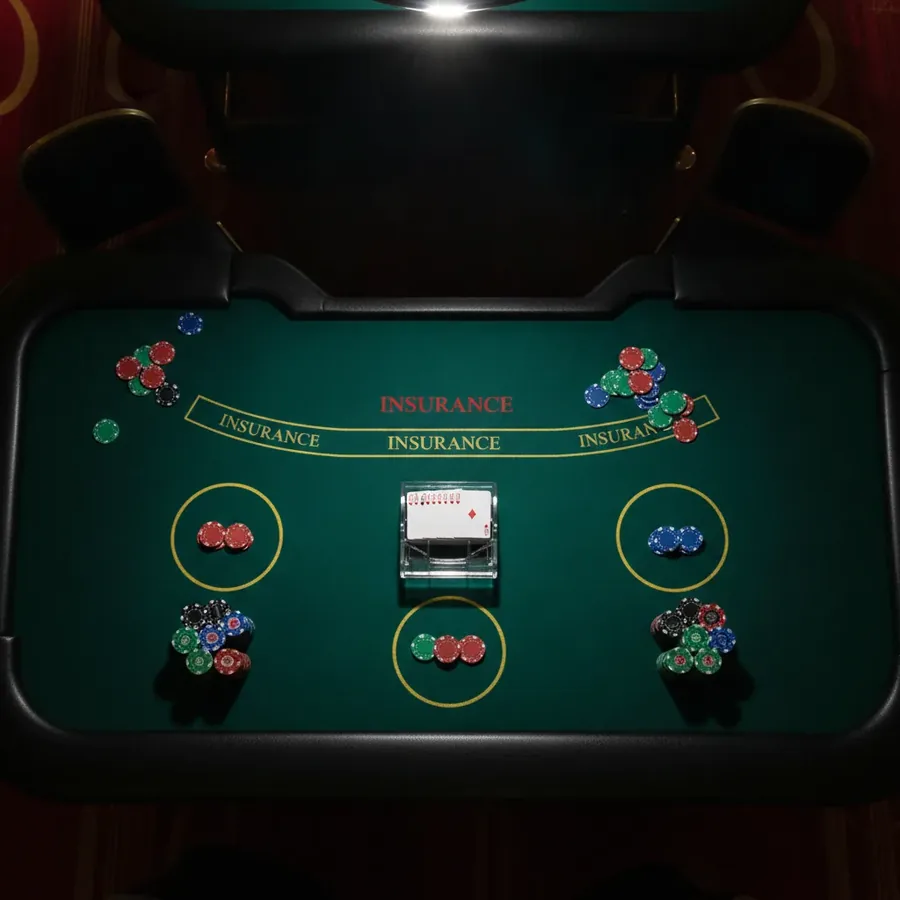
Bet two percent of bankroll per hand
Applying a two percent betting strategy to a 20 EUR bankroll dictates a maximum wager of 0.40 EUR per hand, which ensures longevity against the house edge found in most blackjack variants. This conservative approach significantly reduces the risk of ruin compared to betting larger fractions of the bankroll, allowing the player to weather the natural variance inherent in card games over an extended period.
Standard deviation figures, such as the 1.15 noted for Liberal Vegas Strip rules, indicate the volatility level that this small bet size helps mitigate. By keeping wagers low relative to the total balance, the player minimizes the impact of these statistical fluctuations, ensuring that the bankroll remains intact long enough to potentially benefit from favorable runs of cards.
This methodical staking plan contrasts with high-variance strategies often seen in bonus hunting, where larger bets are used to clear turnover requirements quickly. However, given the 10% contribution rate of table games toward wagering, maintaining a steady, low-stakes rhythm is essential for preserving capital while slowly accumulating the necessary playthrough volume required to unlock any associated bonus funds.
Bonus Lost Due to 10 Percent Contribution
The 300% welcome bonus up to €2,000 plus 100 free spins carries a critical restriction where table games contribute only 10% toward the wagering requirement. This means that every 100 EUR wagered on blackjack or other live tables counts as merely 10 EUR toward the total turnover needed to convert the bonus into withdrawable cash, drastically slowing down the clearance process.
In contrast, slots contribute 100% to the same requirement, making them the efficient vehicle for clearing the bonus terms. If a player attempts to use the bonus primarily on live tables like Quantum Blackjack Plus Live, they must wager ten times the amount compared to playing slots, which exponentially increases the exposure to the house edge and the likelihood of losing the bonus funds.
Calculating the impact reveals that to clear a €2,000 bonus with a 40x wagering requirement (totaling €80,000 turnover), playing exclusively on tables would require €800,000 in actual bets due to the 10% contribution factor. This mathematical reality makes table game play highly inefficient for bonus conversion, effectively turning the generous initial offer into a trap for those unaware of the contribution percentages.
Side Bets Increase House Edge to 5 Percent
Insurance is a side bet available in blackjack variants like Liberal Vegas Strip, paying 2:1 when the dealer has an ace showing. Although it appears attractive, this wager carries a house edge of 7.47%, which significantly drags down the overall return to player percentage from the base 99.72% to much lower levels if included in regular play.
Quantum Blackjack Plus Live introduces additional complexity with quantum multipliers up to 1,000x, but these features do not alter the fundamental house edge calculations derived from the base game rules. The RTP of 99.57% assumes optimal strategy, meaning that deviating from basic strategy to chase large multipliers or placing insurance bets will inevitably increase the casino's advantage beyond the stated theoretical return.
Players seeking to minimize losses should avoid all side bets, including insurance, because the 7.47% house edge on insurance is far worse than the 0.28% edge on the main game. Even slight deviations from the optimal strategy required for the 99.57% RTP can cause the effective house edge to rise sharply, eroding the bankroll much faster than adhering strictly to the recommended playing decisions.
What Percentage Does Blackjack Count Towards Bonus?
Blackjack games, including live variants like Lightning Blackjack and standard versions, count for exactly 10% toward the wagering requirement of the 300% welcome bonus up to €2,000 plus 100 free spins. This low contribution rate forces players to wager ten times the actual bet amount to meet the turnover conditions, making it a financially inefficient path compared to slot games which contribute fully.
Slots contribute 100% to the bonus turnover, creating a stark disparity between the two game types regarding bonus clearance efficiency. For instance, wagering €100 on slots reduces the remaining requirement by €100, whereas the same wager on blackjack only reduces it by €10, requiring nine additional hundred-euro bets to achieve the same progress in meeting the terms.
This 10% contribution rule applies universally across all blackjack titles offered, regardless of their specific house edge or RTP variations. Whether playing the high-RTP Liberal Vegas Strip or the standard Quantum version, the bonus contribution remains fixed at 10%, meaning that strategic choices affecting the game's odds have little bearing on the speed at which the bonus requirements are satisfied.
Blackjack variants at a glance
| Variant | Payout | House edge | Rule | Bet range |
|---|---|---|---|---|
| Blackjack Surrender (Late Surrender) – Regel-Effekt | n.a. (Regel-Modifikator) | −0.08 Prozentpunkte | Spieler gibt Hand nach Dealer-Blackjack-Prüfung auf, verliert die Hälfte des Einsatzes. Verbessert RTP um ca. 0.08 Prozentpunkte. Early Surrender ist wesentlich wertvoller (bis −0.6 Prozentpunkte), aber extrem selten. | Rückzahlung 50% des Einsatzes |
| Blackjack Split / Double / H17 – Regel-Effekte | n.a. (Regel-Modifikatoren) | H17 +0.22 Prozentpunkte; RSA −0.08 Prozentpunkte; DAS −0.14 Prozentpunkte | Dealer Hits Soft 17 verschlechtert RTP um 0.22 Prozentpunkte; Resplit Aces verbessert um 0.08 Prozentpunkte; Double After Split verbessert um ca. 0.14 Prozentpunkte; 6 Decks statt 8 – ca. 0.02 Prozentpunkte. | Double – Einsatz ×2 mit einer Karte; Split – bis 4 Hände; Ass-Split meist mit einer Karte. |
| Blackjack Liberal Vegas Strip (liberale Regeln, 3:2) | 99.72% | 0.28% | Günstigste Regelkombination: S17 + DAS + Resplit + Late Surrender. Standardabweichung 1,15 | Blackjack 3:2, Gewinn 1:1 |
| Blackjack Insurance / Versicherung (6–8 Decks) | 92.53% | 7.47% | Separate Nebenwette bis 50% der Hauptwette, wenn der Dealer ein Ass hat. Basisstrategie schreibt IMMER Ablehnung vor (außer Karten zählen bei True Count ≥ +3). Bei einem Deck Vorteil ≈ 5.88% | Insurance 2:1 |
| Blackjack Ein Deck, klassische Regeln, 3:2 | 99.85% | 0.15% | Weniger Decks = niedrigerer Vorteil; ein Deck gibt ca. −0.48 Prozentpunkte gegenüber 8 Decks. Oft durch 6:5 Auszahlung kompensiert. | Blackjack 3:2, Gewinn 1:1 |
| Blackjack 6 Decks, S17, DAS, DOA, Auszahlung 3:2, Basisstrategie | 99.54% | 0.46% | Dealer steht auf Soft 17; Verdopplung auf jeder Zweierkarte; Verdopplung nach Split erlaubt; keine Aufgabe. Basisstrategie ist für diesen Wert zwingend | Blackjack 3:2, normaler Gewinn 1:1, Insurance 2:1 |
Ace Split: only one card per hand
The bonus terms impose a restriction on the Blackjack 1 Deck variant where players receive exactly one card when splitting Aces. This rule prevents the creation of additional strong hands from a single pair, significantly altering the strategic depth compared to standard liberal rules. Consequently, the theoretical return drops, increasing the house edge for players attempting to maximize their €2,000 welcome bonus.
This limitation contrasts sharply with the Blackjack Liberal Vegas Strip option, which permits resplitting Aces and offers a superior RTP of 99.72%. By restricting Aces to a single card, the casino reduces the player's ability to capitalize on favorable deck compositions during the wagering phase. The effective house edge rises above the base 0.15% figure cited for classic single-deck games without this specific constraint.
Players must adjust their basic strategy accordingly, as hitting or doubling on split Aces becomes mathematically incorrect under these conditions. The restriction applies uniformly across all qualifying tables, ensuring that the 10% contribution rate towards turnover remains consistent despite the lower variance. Ignoring this rule may lead to suboptimal play, eroding the bankroll faster than necessary while fulfilling the x40 wagering requirement.
Place Side Bet before cards are dealt
The Quantum Blackjack Plus Live table allows players to place side bets involving multipliers up to 1,000x on three-card combinations totaling 21 points. These bets must be positioned before the initial deal, adding a layer of risk that is separate from the main game outcome. The base RTP for this live variant stands at 99.57%, but the side bet volatility can drastically alter short-term returns during the bonus period.
Side wagers in Lightning Blackjack offer multipliers up to 25x on winning hands, yet they contribute differently to the overall expected value compared to the main bet. While the main game maintains an RTP of 99.56%, the side bet often carries a higher house edge that accelerates the depletion of bonus funds. Players using the €2,000 max bonus should monitor these contributions closely to avoid premature account closure due to balance exhaustion.
Insurance bets in standard six-to-eight deck games provide a 2:1 payout if the dealer has a blackjack, but this side bet increases the house edge to 7.47%. Since insurance is generally discouraged unless counting cards, it rarely benefits those strictly following basic strategy for the welcome bonus. The mandatory pre-deal placement ensures that the casino captures its statistical advantage before any cards are revealed to the participant.
What doesn't count towards turnover at 10 percent?
Table games such as Blackjack variants contribute only 10 percent towards the wagering requirement, meaning €100 played equals just €10 of progress. This low contribution rate makes clearing the 40x multiplier on a €2,000 bonus extremely inefficient compared to slot games which contribute 100 percent. A player must wager €20,000 on tables to generate the same turnover credit as €2,000 wagered on eligible slots.
The Blackjack Party table by Evolution falls into this restricted category, limiting the speed at which the bonus funds can be converted to withdrawable cash. With betting limits ranging from 1.00 EUR to 1,000 EUR, high rollers still face the same 10% conversion penalty regardless of stake size. This structural disadvantage forces players to either accept the longer clearance time or switch entirely to higher-contribution game types.
Quantum Blackjack Plus Live also adheres to this 10% contribution rule, negating the appeal of its high-multiplier side bets for bonus hunters. Although the game offers an impressive RTP of 99.57% with optimal strategy, the slow accumulation of turnover credits makes it a poor choice for clearing large bonuses. The mathematical reality dictates that focusing on slots yields a significantly faster path to unlocking the full bonus amount.
Which rule variants does the software show?
The software presents multiple Blackjack configurations, including a six-deck game with a 6:5 payout ratio that increases the house edge by 1.39 percentage points. This specific variant reduces the payout on a natural blackjack from 150% to 120% of the original stake, severely impacting long-term profitability. Players seeking the best odds within the bonus framework should avoid this configuration in favor of more favorable rule sets.
In contrast, the standard six-deck version with a 3:2 payout and S17 rules offers a much better house edge of 0.46% and an RTP of 99.54%. This variant allows doubling on any two cards and after splits, providing greater flexibility for strategic play during the wagering process. The difference in expected loss between the 6:5 and 3:2 versions is substantial, making the latter far more suitable for preserving bonus capital.
The single-deck classic game with 3:2 payouts boasts the lowest house edge at 0.15%, assuming no restrictive split rules are applied. However, many single-deck games compensate for this advantage by introducing the 6:5 payout structure, effectively neutralizing the benefit of fewer decks. Understanding these variations is crucial for maximizing the utility of the 300% welcome bonus across different table offerings.
Continuous Shuffling Machine shuffles after each round
Continuous Shuffling Machines (CSM) reset the deck composition after every hand, eliminating the possibility of card counting strategies. This mechanical feature ensures that the house edge remains constant and unpredictable, preventing players from gaining a temporal advantage over the casino. For bonus users, this means relying solely on basic strategy rather than advanced techniques to manage their €2,000 deposit match.
The lack of deck penetration inherent in CSM usage affects the effectiveness of side bets like insurance, which rely on knowing the remaining card distribution. In traditional shoes, tracking the ratio of high to low cards can occasionally make insurance profitable, but CSMs render this analysis useless. Players must accept the fixed 7.47% house edge on insurance bets without any hope of overcoming it through observation.
This technology also impacts the variance of the game, creating a steady stream of independent events that align closely with theoretical RTP figures. While slots offer high volatility, CSM-based table games provide a more predictable, albeit slower, path to meeting the 40x wagering requirement. The consistency of the shuffle ensures that the 10% contribution rate applies uniformly across all sessions without deviation based on deck state.
Side Bets don't count towards bonus turnover
Table games contribute only 10% to the wagering requirement, whereas slots contribute 100%. This means that for every €100 wagered on blackjack variants, only €10 counts toward clearing the bonus funds. Players must therefore generate significantly higher volume on slot machines to meet the same turnover threshold efficiently.
The Blackjack Insurance side bet is a distinct exclusion from this contribution rate, as it is treated separately from the main hand. Since insurance pays 2:1 and requires a separate wager when the dealer shows an Ace, it falls under the low-contribution table game category. This rule prevents players from using high-variance insurance bets to quickly satisfy the rollover conditions.
Quantum Blackjack Plus Live by Playtech features multipliers up to 1,000x, yet its 99.57% RTP does not alter the 10% contribution cap. The maximum bet of 5,000 EUR per hand remains valid, but the effective turnover generated is limited by the percentage rule. Consequently, players focusing on these live tables will find the bonus clearance process much slower than those playing eligible slots.
Insurance vs Even Money on Own Blackjack
Blackjack Insurance offers a payout of 2:1 if the dealer has a ten-value card underneath the Ace, costing up to 50% of the main bet. However, the house edge for this specific side bet rises to 7.47%, which is significantly higher than the standard game average. This high cost makes insurance a poor choice for preserving bankroll during bonus wagering periods.
Basic strategy dictates always declining insurance unless the true count is greater than or equal to +3 in card counting scenarios. For a single-deck game, the advantage shifts to approximately 5.88% against the player when taking insurance incorrectly. During the active bonus phase, avoiding this negative expectation bet is crucial for maintaining the required turnover speed.
Even money is essentially taking insurance on a natural blackjack before the dealer checks for their own blackjack. While it guarantees a 1:1 payout instead of the potential 3:2, it reduces the expected value of the hand. Since the base game RTP can reach 99.72% with liberal rules, accepting even money unnecessarily lowers the return compared to letting the hand play out normally.
When can you increase your bet?
Players may double their stake after receiving two cards if they choose to Double Down, effectively doubling the original wager. In Liberal Vegas Strip variants, this option is available on any two-card total, including soft hands like A,6. This strategic move increases volatility but also accelerates the accumulation of turnover required for the 300% welcome bonus up to €2,000.
Splitting pairs allows a player to create two separate hands, each requiring a new bet equal to the original stake. The rules permit resplitting up to four hands, with Aces typically restricted to receiving only one additional card. Each split hand contributes independently to the 10% table game contribution rate, meaning the total turnover scales linearly with the number of active splits.
Surrender options vary between Early and Late surrender, with the latter allowing players to forfeit half their bet after the dealer checks for blackjack. Late surrender improves the RTP by approximately 0.08 percentage points, reducing the overall house edge slightly. Using this feature strategically can minimize losses during high-wagering phases, preserving capital for more profitable rounds.
Seat change at the Live Table in 20 seconds
Live dealer platforms like Evolution's Lightning Blackjack allow seamless transitions between seats without interrupting the current round's flow. The maximum bet limit for Lightning Blackjack stands at 2,500 EUR, accommodating high-stakes players who need to move quickly between tables. This flexibility supports efficient bonus turnover management by allowing users to switch strategies or limits rapidly.
Quantum Blackjack Plus by Playtech imposes a wider betting range from 1 EUR to 5,000 EUR per hand, offering greater variance control. The game features quantum multipliers up to 1,000x on three-card combinations totaling 21 points, which can drastically alter short-term outcomes. Despite these high payouts, the underlying RTP remains at 99.57%, ensuring long-term predictability for analytical tracking.
Blackjack Party by Evolution provides a social atmosphere with two moderators, catering to players who prefer interactive experiences over silent gameplay. The betting limits here are set between 1.00 EUR and 1,000 EUR, making it accessible for moderate staking strategies. Seat changes in these live environments are instantaneous, enabling players to capitalize on different table dynamics without delay.
Split, Double Down, and Surrender in Numbers
Resplitting Aces (RSA) improves the RTP by approximately 0.08 percentage points compared to games prohibiting this action. Allowing players to re-split aces into multiple hands increases the potential for winning combinations, thereby enhancing the overall return. This rule modifier is critical for achieving the optimal 99.72% RTP found in Liberal Vegas Strip variants.
Doubling After Split (DAS) further boosts the RTP by about 0.14 percentage points, giving players more opportunities to maximize favorable situations. Without DAS, the house edge increases, making the game less favorable for strategic players aiming to clear the 100 free spins bonus requirements. Combining DAS with other liberal rules creates the most advantageous environment for meeting turnover goals.
Dealer hitting Soft 17 (H17) negatively impacts the RTP by adding 0.22 percentage points to the house edge, making it a costly rule. Games where the dealer stands on Soft 17 are preferable, as they reduce the casino's advantage and improve player returns. Understanding these numerical differences helps players select tables that align with their bonus wagering efficiency targets.
Contact
Live - online chat
Banking







Providers











Flagman Casino 2026